
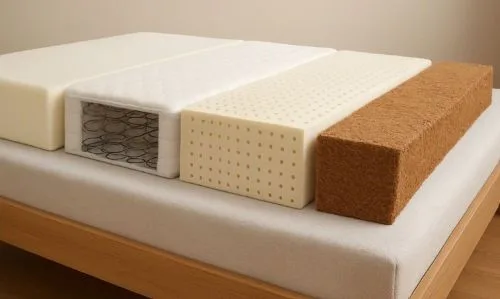
Walk into a mattress store, and the choice of materials can make it difficult to know where to start. Smart grid coir, repurposed rebonded foam, certified latex, and spring mattresses each offer a different sleeping experience. Coir provides a firm, stable surface, while foam adds cushioning. Latex offers responsive support, and spring mattresses provide bounce and airflow.
Your sleeping position, preferred firmness, temperature needs, and sensitivity to movement help narrow the choice. This guide will help you compare the four types of mattresses.
 How Do Coir, Foam, Latex, and Spring Mattresses Differ?
Here is an instant comparison between the feel, contouring, bounce, airflow, and motion isolation qualities of smart grid coir, repurposed rebonded foam, certified latex, and spring beds.
| Mattress Type | General Feel | Body Contouring | Bounce | Airflow Motion | Isolation |
| Smart Grid Coir | Firm and structured | Low | Low | Good | Moderate |
| Repurposed Rebonded Foam | Cushioned | High | Low | Varies | High |
| Certified Latex | Responsive and supportive | Moderate | Moderate | Good | Good |
| Spring | Bouncy and supportive | Low to Moderate | High | High | Varies |
What are Smart Grid Coir Mattresses, and Who Do They Suit Best?
Smart grid coir mattresses use coir fiber as the main material and are known for a firm feel. The points below cover what to expect:
- Firm Sleeping Surface: Smart grid coir gives a firm surface with very little sinking, so your body stays supported through the night.
- Natural Airflow: The coir fiber structure lets air move through the mattress, which helps it stay fresh.
- Less Contouring: Compared to repurposed rebonded foam, smart grid coir hugs the body less closely.
- Best For Firm-Surface Sleepers: It suits people who prefer a stable, firm bed.
May feel too firm for pressure points if you need cushioning at the shoulders and hips.
When is Foam Mattress the Right Choice?
Beds made from repurposed and rebonded foam are mainly selected for their comfort and ability to conform to the shape of the body, even though they do not all provide the same experience.
- Body Contouring: Foam that has been rebonded and repurposed fits the shape of the sleeper's body well, thereby often helping to alleviate pressure from the shoulders and hips.
- Low Motion Transfer: It is less likely that action on one side will affect the other; therefore, partners are less likely to disturb one another.
- Wide Firmness Range: Foam beds are available ranging from soft to firm, some providing a plush, sink-in sensation and others remaining firm and supportive.
- Slower Response in Memory Foam: Certain memory foams are slower to react than ordinary foams when you change position.
- Varying Heat Retention: The amount of heat a mattress retains varies according to the kind of foam used, its density, and the way the mattress is put together.
If you prefer a soft, sink-in type of feel, then repurposed rebonded foam is exactly what you'll want.
What Should You Know Before Buying a Spring Mattress?
Spring mattresses use coils as the support system, which gives a responsive feel.
- Bouncy And Responsive: The coils push back as you move, so changing position from side to side feels easy.
- Good Airflow: The open coil structure lets air pass through the mattress freely.
- Firm Edge Support: Most spring beds hold up well at the edges, so sitting or sleeping near the side feels stable.
- Motion Transfer Varies: How much movement carries across the bed depends on the type of coil system.
- Bonnell Springs: These coils are interconnected, so they tend to transfer more movement.
- Pocket Springs: Each coil works independently, so there is less motion transfer.
Best for active, breathable sleepers: A spring mattress suits people who prefer a lively, airy bed surface.
What Kind of Mattress is Best for Your Sleeping Style?
- Side Sleepers
Side sleepers tend to require ample cushioning around the shoulder and hip areas. Certified latex and repurposed rebonded foam can offer superior contouring abilities.
- Back Sleepers
Back sleepers require even balance to prevent excess sinking and maintain alignment. All mattresses can serve this purpose based on firmness.
- Stomach Sleepers
Stomach sleepers prefer mattresses with more rigid construction to avoid sinking in the middle. All mattresses are ideal choices.
- Combination Sleepers
If you move around a lot during your sleep cycle, you will require an easily moving certified latex and spring mattress.
Pick The Right Mattress Material For Your Sleeping Preferences
No single mattress material will serve everyone in the same way. Coir will suit people who prefer a firmer mattress, but repurposed rebonded foam gives a snug cushion. Certified latex gives comfort, and spring mattresses give bounce.
When comparing mattresses, consider firmness, sleeping position, body weight, temperature preferences, and overall construction.
Brands such as Kurlon offer these four varieties of mattresses, which make comparisons easy depending on your sleeping preferences. Explore the available range carefully and choose a mattress with the right balance of comfort, support, and everyday usability.