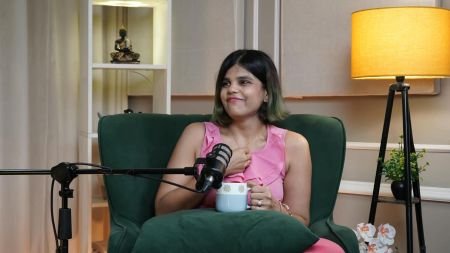
From Raj Shamani to Nikhil Kamath and Ranveer Allahbadia, India's podcast scene has some familiar male faces. But where are the women building equally recognisable business podcast brands of their own? Harshita Dagha believes it is time we asked that question.
Think of an Indian business podcast. Which names come to mind?
For many people, it might be Raj Shamani, Nikhil Kamath or Ranveer Allahbadia.
Raj Shamani has built Figuring Out around conversations with entrepreneurs, celebrities and business leaders. Nikhil Kamath brings founders, investors and industry experts into discussions through his WTF Is podcast ecosystem. Ranveer Allahbadia has built The Ranveer Show into a widely recognised interview platform covering everything from entrepreneurship and self-improvement to entertainment and spirituality.
Each has a different style, audience and approach. But they have all demonstrated something important: a podcast can become much bigger than a microphone, a camera and a series of interviews. It can become a personal brand, a business asset and a powerful platform for influence.
Now comes the uncomfortable question.
Why are there so few Indian women whose names immediately come to mind when we talk about major business podcast hosts?
India has women building companies, raising capital, leading teams and changing industries. There is no shortage of women with business experience or interesting stories to tell.
Yet the number of women who have built widely recognised, independent business podcast brands appears much smaller than the pool of prominent male hosts.
This is not to say that women are absent from Indian podcasting. Women host shows, interview influential people and share their expertise across countless subjects. The bigger question is why more women are not becoming household names as the people leading India's business conversations.
For Harshita Dagha, a Mumbai-based branding and digital marketing consultant with over 16 years of professional experience, this is a conversation about visibility, ownership and a business opportunity that deserves more attention.
India's podcast industry has room for more women
Podcasting has changed the way people consume information. Audiences can now spend an hour listening to a founder explain how a company was built, an investor discuss the economy or an entrepreneur share the decisions behind a business.
The format gives conversations room to breathe. It allows people to go beyond headlines, explore different perspectives and build a relationship with the person asking the questions.
And that relationship matters.
When audiences repeatedly return to a podcast, they often begin to trust the host, not just the guests. Over time, the host becomes a recognisable voice with their own audience, reputation and influence.
That is precisely what makes podcasting an attractive business opportunity.
India's podcast market has been growing, and the opportunity extends beyond entertainment. Business podcasts can help audiences understand entrepreneurship, technology, finance, marketing, leadership and the changing economy.
So why shouldn't more Indian women build platforms in this space?
Raj Shamani, Nikhil Kamath and Ranveer Allahbadia have shown what is possible
The success of these male podcast hosts is worth examining, not because women need to copy them, but because their journeys show how different kinds of podcast brands can grow.
Raj Shamani has made business and entrepreneurship accessible through conversations that combine practical insights with the personal stories behind success. His platform shows how a host can connect business knowledge with a broader audience.
Nikhil Kamath brings his own experience as an entrepreneur and investor to conversations about business, markets and emerging industries. His podcast projects demonstrate how professional credibility can become part of a show's identity.
Ranveer Allahbadia has built a broad interview-led media presence. His ability to bring together guests from different fields shows how a consistent host identity and a wide-ranging content strategy can attract audiences beyond a single subject.
Their businesses are different, but there is a common lesson: the host can become the brand.
The opportunity for women is not to create another Raj Shamani or another Nikhil Kamath. It is to build distinctive platforms with their own voices, audiences, guest networks and commercial models.
And those platforms do not need to focus exclusively on women's issues. They can explore business failures, funding, entrepreneurship, technology, leadership, marketing, investment and everything else shaping India's future.
Why aren't more women building business podcast brands?
There is no single answer. It would be unfair to assume that women lack the confidence, knowledge or ambition to become successful podcast hosts.
But building a serious podcast is not as simple as buying a microphone and inviting guests.
Access to the right people matters. Established founders, investors and business leaders can make a show more attractive to audiences. Getting those guests often depends on professional networks, introductions and the credibility a host has built over time.
Podcasting requires a business model. Recording episodes is only one part of the job. A host also needs to develop an audience, distribute content, build partnerships and find ways to generate revenue. Without a sustainable model, even a promising show can struggle to grow.
Visibility takes consistency. One viral interview does not automatically create a lasting media brand. The host needs a clear identity, good conversations and a reason for people to return.
Commercial opportunities need to follow audience growth. Sponsorships, brand collaborations, events and paid content can help turn a podcast into a business. Emerging women hosts need access to the same commercial networks and opportunities that help other media brands grow.
There is also a question of perception. When audiences repeatedly see the same names associated with business podcasting, those names become the default reference points. New hosts have to work harder to enter that conversation and establish their own identities.
These are possible contributing factors, not a definitive explanation for the gender gap. More research into the number of women hosts, audience sizes, funding and podcast revenue in India would help establish how large the gap really is.
But the question is worth asking now, rather than waiting for the industry to answer it for us.
India doesn't just need more women guests. It needs more women leading the conversation.
Women have valuable perspectives on entrepreneurship, finance, leadership and business growth. Yet representation as a guest and recognition as a host are two different things.
A guest gets a platform for an episode. A host builds the platform, chooses the questions, develops the editorial identity and creates a relationship with the audience over time.
That difference matters.
India needs more women who are recognised for the conversations they lead, not just the experiences they share. It needs women interviewing founders, questioning investors, discussing business failures, examining new technologies and exploring the realities of running companies.
It also needs women building commercially sustainable podcast businesses, rather than treating podcasting only as a hobby or an extension of their social media presence.
The goal is not to create a separate corner of the internet where women only interview other women. It is to make women-led business podcasts a normal, visible and commercially credible part of India's media landscape.
How can we close the gap in India's business podcast industry?
The solution begins with treating women podcast hosts as business builders.
First, more women need opportunities to develop their own recognisable host identities. A clear subject area, an interesting interviewing style and consistent publishing can help a podcast stand out.
Second, business communities need to open their networks. Startup founders, investors, professional associations and industry leaders can help emerging hosts access credible guests and meaningful conversations.
Third, brands and sponsors should evaluate women-led podcasts on the quality of their audience, relevance and commercial potential. A host should not have to be a celebrity before a business sees value in the platform.
Fourth, women podcast hosts can benefit from building a community of their own. Sharing introductions, collaborating on episodes and exchanging practical knowledge about production, distribution and monetisation can help more platforms grow.
Finally, the industry needs better data. How many women host business podcasts in India? How many own their platforms? How many have built substantial audiences or sustainable revenues? These are questions worth measuring if the industry wants to understand representation properly.
The opportunity is not simply to increase the number of women with podcasts. It is to help more women build media brands that last.
Harshita Dagha sees a business opportunity in podcasting
With over 16 years of experience in branding, digital marketing, social media strategy and public relations, Harshita Dagha approaches podcasting from a business and visibility perspective.
Her podcast journey began on Instagram in January 2026, with YouTube added subsequently. Her professional background connects podcasting with a question many founders, consultants and experts are now asking: how can they build greater visibility and establish authority in their fields?
For a business owner, a podcast appearance can be an opportunity to explain their expertise, tell the story behind their company and connect with a relevant audience. For a host, the value lies in developing a trusted platform that brings together interesting people, useful conversations and a clear editorial identity.
There is also a wider opportunity to connect podcasting with branding and public relations. An interview can generate short videos, social media content and further conversations, extending its value beyond the original recording.
For women who understand business, communications and audience building, podcasting offers a way to bring those skills together in a format with its own identity and commercial potential.
Harshita's experience makes her part of this emerging conversation. Her longer-term opportunity is to build a recognisable podcast brand at www.harshitadagha.in to demonstrate its reach and commercial value, and contribute to a broader community of women in Indian business media.
The next big Indian business podcaster could be a woman
India has no shortage of ambitious women, successful entrepreneurs or compelling business stories. The opportunity is to create more platforms where those stories are explored by women who have built audiences of their own.
Raj Shamani, Nikhil Kamath and Ranveer Allahbadia have shown that podcasting can become a serious media business. Their success should inspire more creators to explore the format, including women who want to build something distinctive rather than follow an established template.
The industry should be asking how more women can access influential guests, build loyal audiences, attract commercial partnerships and develop long-term media businesses.
Because the real opportunity is not simply to see more women on camera.
It is to see more women deciding which questions get asked, which business stories get told and which conversations shape the next generation of Indian entrepreneurs.
Women are already building businesses. It is time more of them built business podcast empires, too.